THE DECISION IN BRIEF
An oil sprayer develops wetness around the collar after storage; should we immediately request a different seal?
First locate the liquid path and compare affected assemblies with retained controls. Check bottle fit and assembly records, then investigate component changes with the supplier before specifying a replacement material.
Preserve the evidence before tightening anything
A wet collar is a location, not a diagnosis. Liquid may originate at the bottle seal, run down from the nozzle after use or spread during handling. Tightening or dismantling the package immediately can remove the evidence needed to distinguish those routes. Photograph the assembly, record its orientation and history, and isolate the affected sample from unaffected stock.
Use the product's established handling precautions during investigation. Work with a suitable collection surface and identify which areas were clean before observation. Compare an unused stored assembly with a recently operated one. If wetness appears only after spraying, include nozzle residue and actuator drainage in the investigation instead of assuming a storage seal failure.
Use symptoms to choose the next check
The following comparisons are investigation prompts rather than a diagnostic rule. More than one issue can occur in the same package, particularly when the bottle, closure and formula changed together.
| Observation | Question to investigate | Useful evidence |
|---|---|---|
| Wet bottle shoulder after standing | Where does the first wet area appear? | Untouched stored assembly and photographs |
| Wetness after operation only | Does residue travel from the actuator? | Recorded actuation sequence |
| Closure sits unevenly | Does bottle finish match the closure? | Both drawings and assembly record |
| Changed return action or part shape | Has a component changed during contact? | Retained unused part and affected part |
| One filling run affected | Was application or bottle supply different? | Batch and line setup records |
Distinguish observed change from assumed chemistry
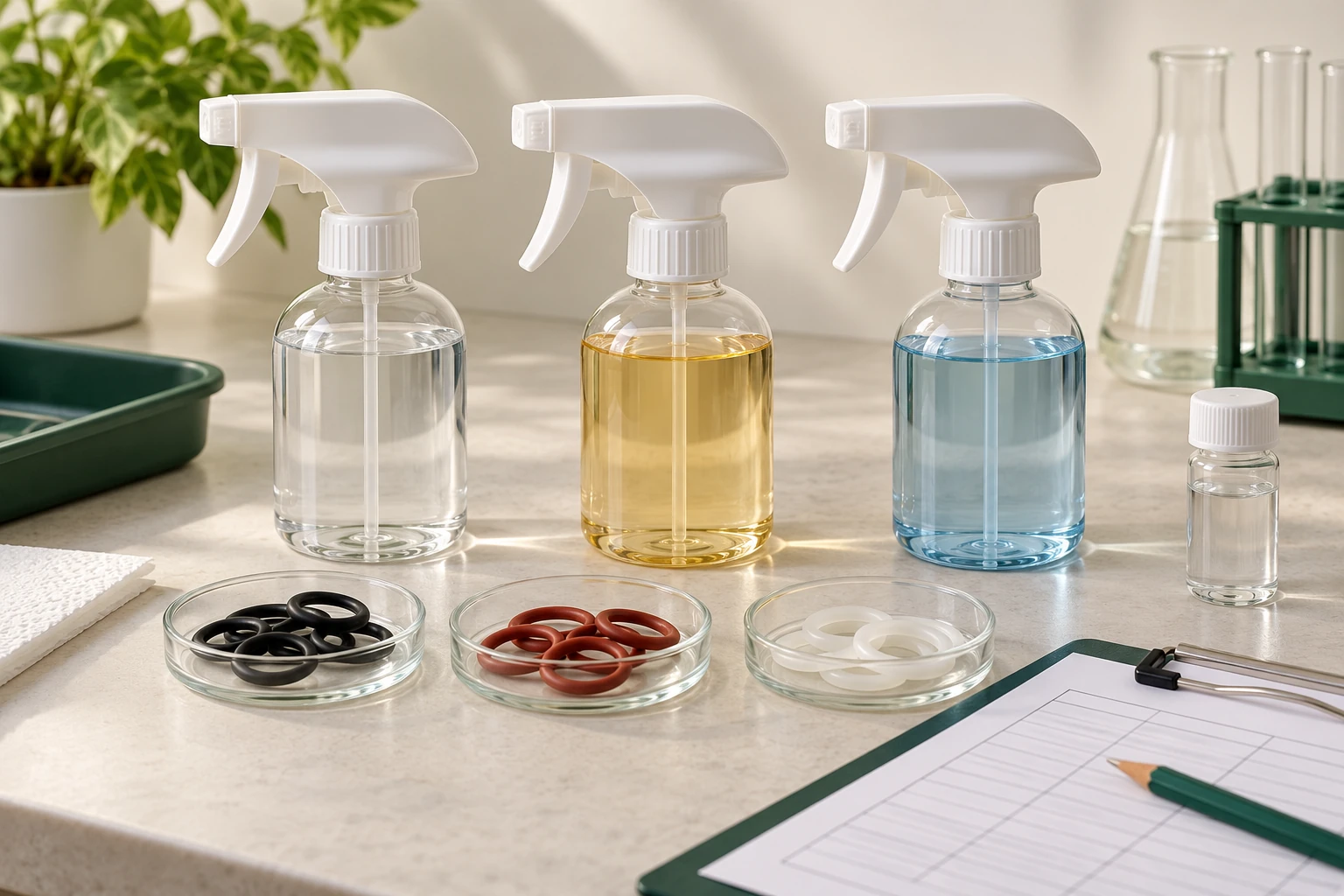
If a seal looks enlarged or softer, record that observation with the sample history and ask the supplier to identify the component. Compare it with an unused reference of the same specification. Visual appearance alone cannot establish an elastomer grade or prove which ingredient caused the change. A different-looking part may also represent a different supplied configuration.
Ask for a component-level review of the formula-contact path. Tolco's 320CR literature identifies a particular O-ring and piston-cup material for that model, illustrating why a chemical-resistance description needs a defined construction. Those materials are not evidence of what STDPAK uses and should not be copied into a STDPAK purchase specification.
Make the corrective trial interpretable
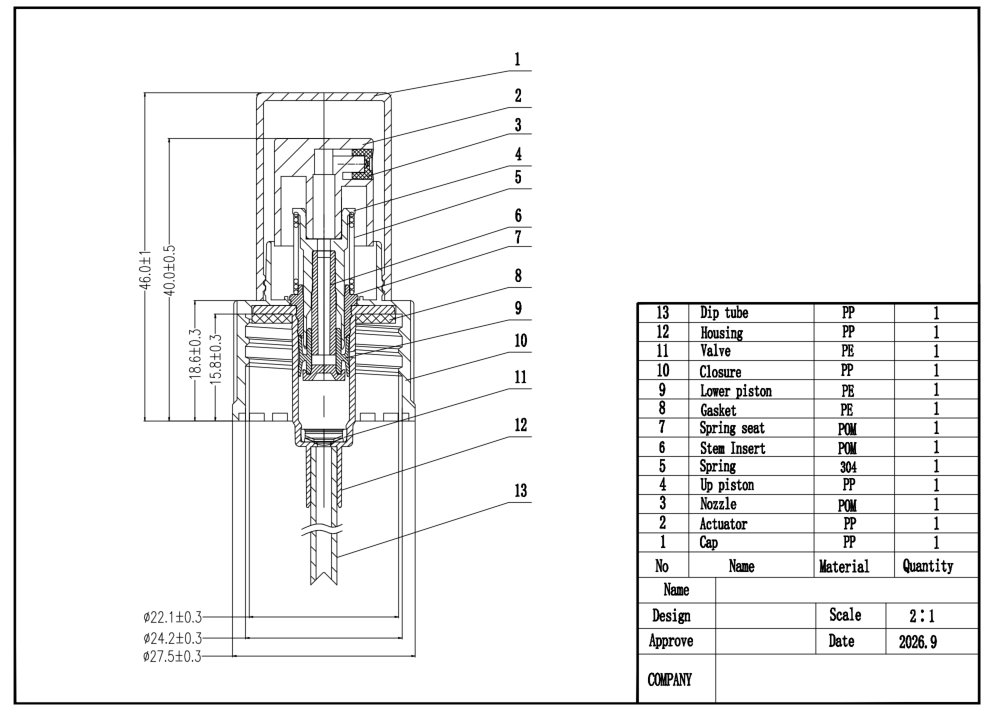
For SP-LP-200, the confirmed facts are PP, PE and POM components, a 304 stainless spring, a PP tube and a double-layer seal design. The design does not establish an FKM or NBR seal grade. Request confirmation of any unlisted contact component rather than inferring its chemistry from the phrase oil-resistant.
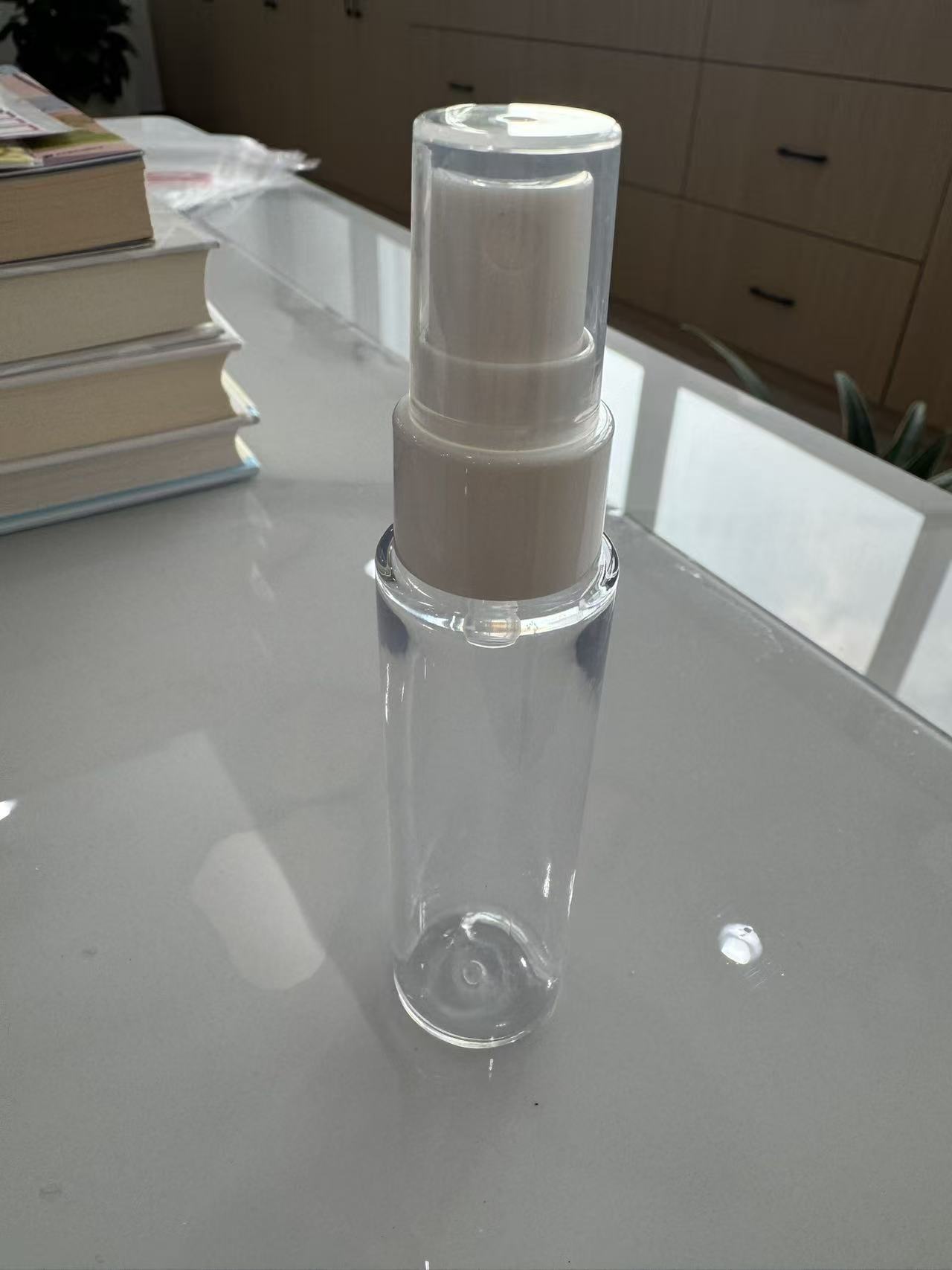
If bottle fit is unresolved, settle the actual neck specification before comparing alternative internal parts. A body diameter on the sprayer drawing is not a neck-finish designation. If assembly is the leading concern, evaluate the approved bottle and closure using the supplier-agreed application procedure, with traceable settings and samples.
Change a defined variable, repeat the relevant storage and dispensing checks, and retain the failed samples until the corrective action is understood. Document what improved, what remains uncertain and which combination is approved. Replacing a seal without this record can hide a bottle-fit issue and leave purchasing unable to reproduce the successful assembly.
Compare affected and unaffected assemblies from the same filling run when available. If only one bottle shows the problem, keep its individual history intact. Combining all observations into a single failure rate too early can conceal a distinct assembly event that deserves separate investigation.
Sources & further reading
Use the references below alongside the selected component drawing and agreed sample plan. Product-specific claims need product-specific evidence.
PRODUCT REFERENCES
Components to discuss with your supplier.
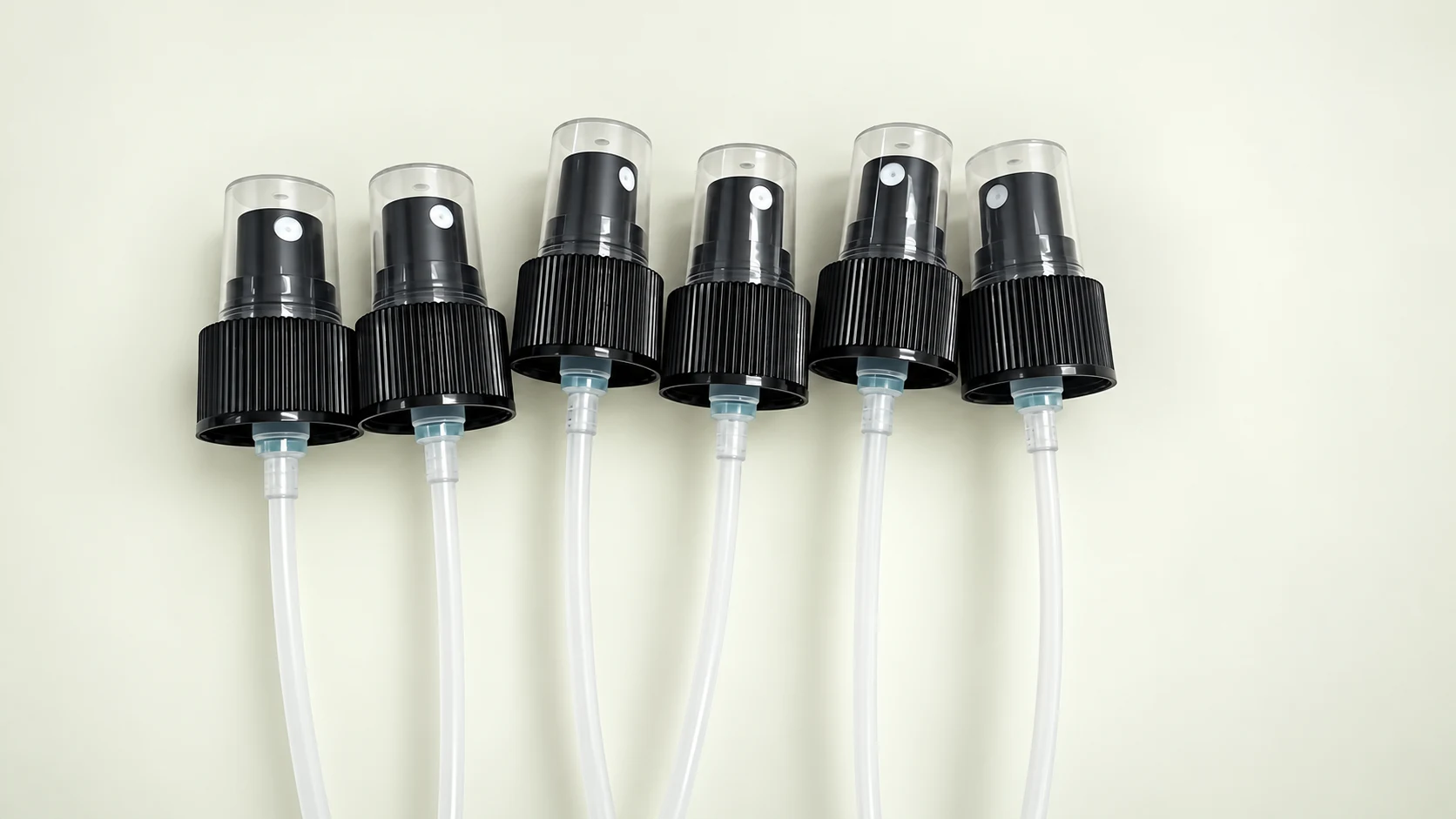
These references share the component type discussed here. Confirm the selected assembly and application with samples.
Related articles
VIEW THE COMPONENTS