THE DECISION IN BRIEF
Our trigger bottle is dry at filling but arrives wet; what should we investigate first?
Preserve an affected shipment and locate the likely liquid path. Review bottle fit, closure application, nozzle position and transit packing together, then evaluate a controlled corrective package with the actual formula.
Inspect the shipment before rebuilding it
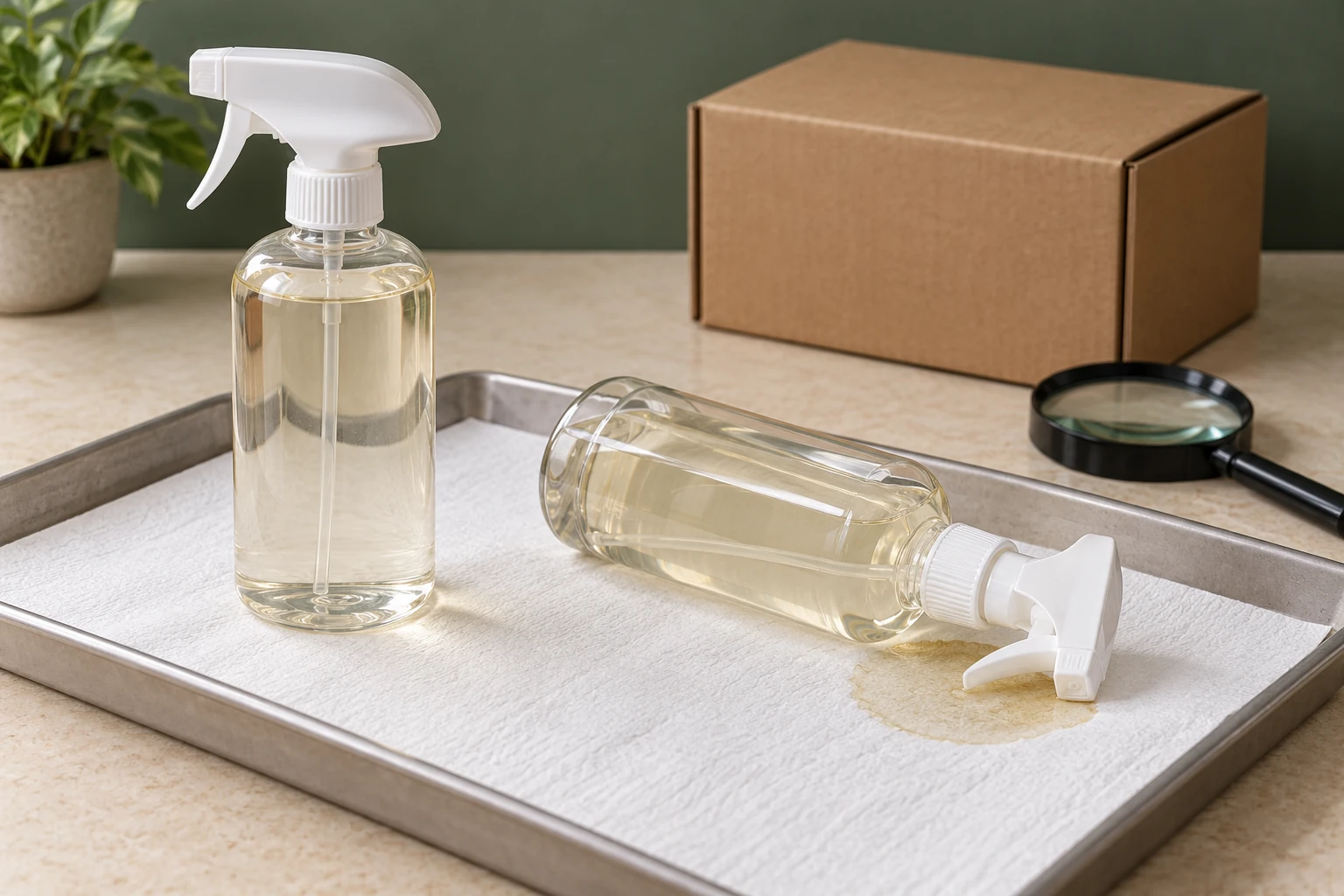
A wet shipping carton does not establish that the trigger mechanism failed. Document where wetness and damage appear, how bottles are oriented and whether dividers or neighbouring packs contact the trigger. Photograph the original arrangement before unpacking everything. Preserve the affected bottle, sprayer and packaging under the product's established handling procedure.
Compare shipment records with filling records. Identify the formula, bottle and trigger lots, closure application process and intended shipping configuration. Note whether the affected goods were packed with triggers attached or with a separate transport closure. Those are different assemblies and need different investigations.
Map the possible routes
Separate evidence from hypotheses in the investigation log. A controlled observation with a clean, identified sample is more useful than repeatedly wiping an affected package and guessing where the liquid began.
| Possible route or event | Evidence to review | Corrective question |
|---|---|---|
| Bottle-to-closure interface | First wet area, finish drawings, application record | Was the intended seal assembled correctly? |
| Nozzle or dispensing path | Nozzle position, residue, operating history | Was the storage configuration correctly engaged? |
| Mechanical contact in transit | Carton damage and contact marks | Can the pack press or strike the trigger? |
| Bottle damage | Damage location and packing arrangement | Does the protective arrangement suit the filled bottle? |
| Configuration mismatch | Part references and retained samples | Were approved components actually supplied? |
Review locking and sealing claims narrowly
Silgan describes Vela as a shipper sprayer, while its published product information also identifies closure choices. Such wording is a reason to ask about the exact shipping configuration; it is not a guarantee for another trigger, bottle or distribution route. Ask STDPAK what configuration is proposed for filled-pack shipment and what evaluation evidence is available for your assembly.
An off setting, a lock and a secondary shipping closure perform different roles. Evaluate the design actually supplied rather than using the terms interchangeably. If users or packers can leave a control partially engaged, review markings and operating instructions along with the component choice. Avoid treating extra tightening as a universal cure for an unexplained leak.
Make the corrective comparison meaningful
Choose a corrective action tied to the evidence. If mechanical contact is suspected, revise the packing arrangement while keeping the bottle and trigger controlled. If bottle fit is unresolved, compare the approved finish and closure before adding protective accessories. If a component substitution occurred, identify it before requesting a new formulation trial.
Agree an evaluation plan representative of the intended distribution route with the responsible packaging team. Document the filled assembly, packing method and observations before and after evaluation. Do not claim a certification or transport standard merely because a parcel was sent successfully or a supplier used the word shipper.
After the package review, operate the samples using the intended instructions. A dry carton alone does not show that the trigger still dispenses acceptably. Preserve the approved packing arrangement and application procedure in the production record, and review changes in bottle supply, carton layout or route before assuming the previous findings still apply.
Ask whether the problem is concentrated in a particular route or packing location. The answer can guide the next comparison without proving the cause. Keep those observations linked to shipment identities, since a mixed collection of returned bottles may no longer reveal the original transit arrangement.
Sources & further reading
Use the references below alongside the selected component drawing and agreed sample plan. Product-specific claims need product-specific evidence.
PRODUCT REFERENCES
Components to discuss with your supplier.
These references share the component type discussed here. Confirm the selected assembly and application with samples.

Related articles
VIEW THE COMPONENTS