THE DECISION IN BRIEF
The label is wet after use. Do we need a different gasket?
Find where the liquid first appears. Spray drifting back onto the bottle, liquid running down from the nozzle, and leakage at the neck can leave similar marks but call for different corrections.
Watch a single operation
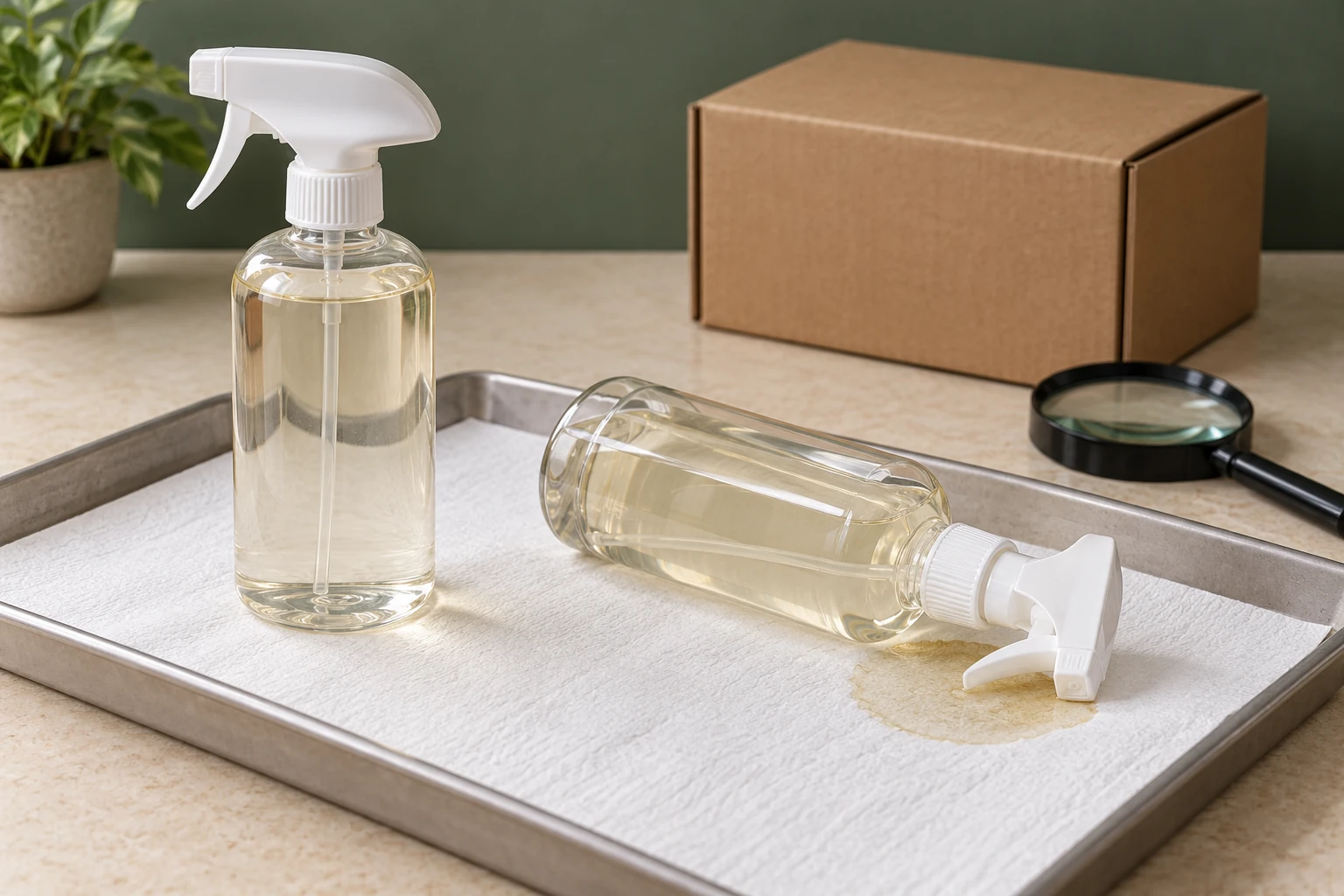
Start with a clean, dry filled bottle. Observe the nozzle, the outside of the closure and the label during one complete trigger stroke, then while the bottle rests. A short video from the side can show whether the first droplet comes from the outlet or the neck. Record nozzle setting and bottle angle; repeated spraying before observation can cover the original route.
Keep an unused filled control beside the used sample. Wetting that develops while both bottles stand suggests a different investigation from wetting seen only during operation. Avoid wiping the nozzle between every stroke unless wiping is part of the intended use.
Change the relevant variable
If the label receives spray directly, compare application distance and the selected spray distribution before altering the seal. If a bead remains on the outlet and then runs down the shroud, ask the supplier to evaluate the nozzle and formula combination. Neither observation proves a gasket defect.
When liquid first appears under the closure, review the assembled neck interface instead. Keep the bottle and trigger identities with the sample. Tightening the closure after every stroke may hide a problem rather than reproduce the customer experience.
Keep cosmetic and functional decisions separate
Once the wetting route is understood, assess label appearance using the actual liquid and decoration. A more water-resistant label may improve appearance, but it does not close an unresolved package leak. Set separate acceptance decisions for dispensing behavior, leakage and label condition.
Before changing label stock, give the sprayer supplier the first-wetting video and the exact assembly reference. Ask for a correction linked to that observed route. Recheck the label only after the revised assembly has been evaluated under the same use conditions.
Sources & further reading
Use the references below alongside the selected component drawing and agreed sample plan. Product-specific claims need product-specific evidence.
PRODUCT REFERENCES
Components to discuss with your supplier.
These references share the component type discussed here. Confirm the selected assembly and application with samples.

Related articles
VIEW THE COMPONENTS