THE DECISION IN BRIEF
A supplier calls its trigger chemical-resistant; can we use it for our new cleaner without further review?
Treat that description as a reason to investigate a candidate. Share the formula information needed for a component review and verify the proposed bottle–trigger assembly with the finished product before approval.
The product category is not the formula
Cleaner, degreaser and detailing spray are useful sales descriptions, but they do not define a sprayer's chemical exposure. A procurement team needs the actual formula revision and relevant composition information. Include solvents, fragrance additions, active ingredients and suspended material where applicable, using an agreed confidential route for sensitive information. Flag what is still undecided in development.
Do not rely on a single pH value or the bottle resin to stand in for this review. A trigger contains multiple functional components, and its exterior appearance reveals little about the internal contact path. Ask the supplier which components the formula can contact in use and storage and which configuration is proposed for that exposure.
Ask for a defined construction
Tolco's Model 320CR literature identifies its O-ring and piston-cup material. This is a useful example of connecting a chemical-resistant description to specified components. It is not a recommendation that the same construction suits every cleaner, and it provides no evidence about materials in a STDPAK trigger.
Request a configuration reference and a contact-component materials description for the candidate being quoted. Clarify whether spring placement, sealing components or other internal details differ between variants. If the supplier's review has limitations because formula information is incomplete, preserve those limitations instead of turning a provisional suggestion into an approval.
Organize the technical questions
Use this checklist to make the review specific enough for a useful reply. The aim is to identify what must be demonstrated, not to obtain a broad assurance.
- Identify the finished formula and any variants that will share the trigger; do not assume different fragrances are equivalent.
- Provide relevant composition and safety information and state what information remains unavailable.
- Ask for the candidate's contact-component construction and any proposed alternatives.
- Describe the bottle, fill conditions, use orientation, storage environment and distribution route.
- Ask which observations would cause the supplier to recommend another configuration.
- Agree the sample-evaluation plan and record the scope of any supplier statement.
Evaluate performance after contact
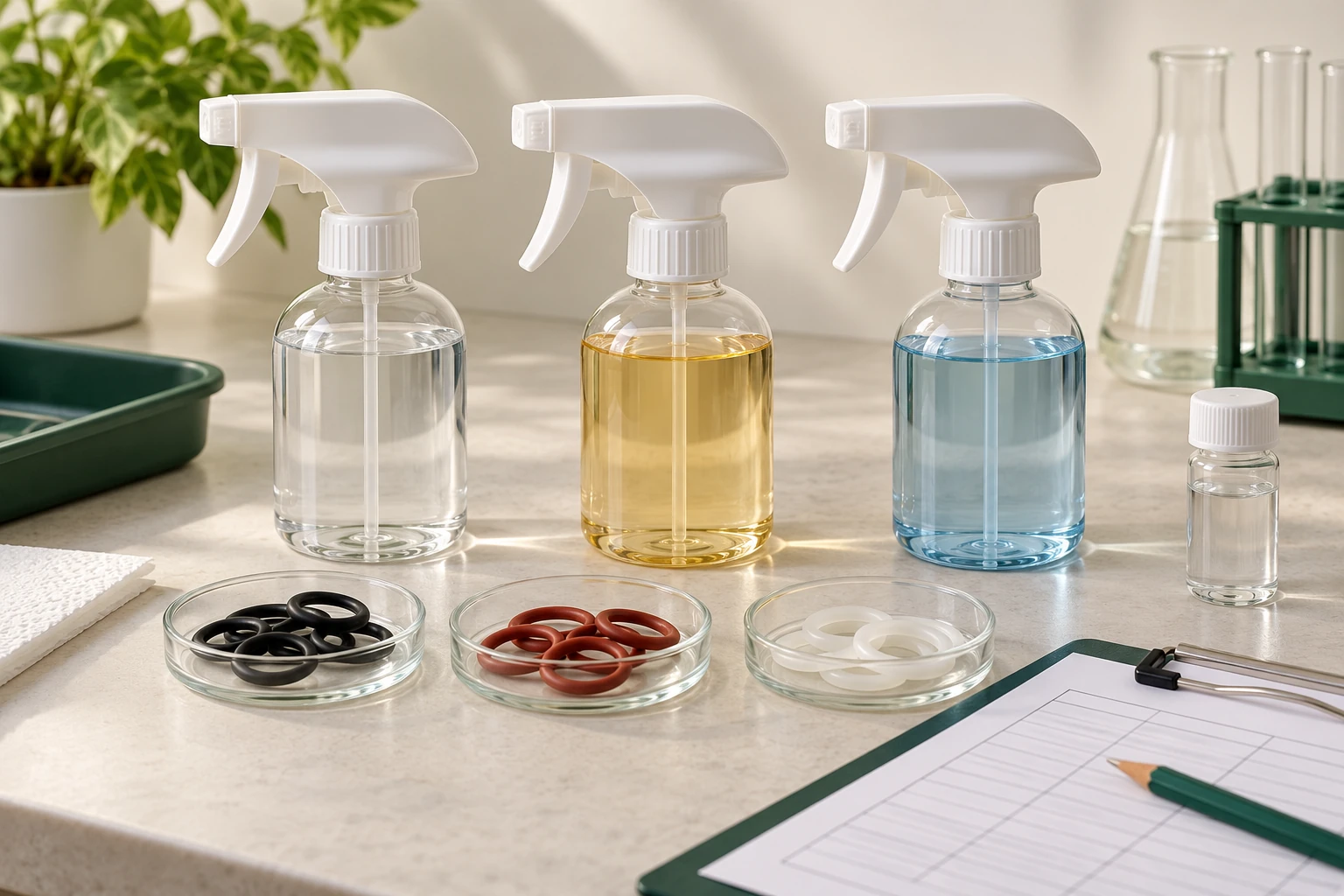
A chemical-fit trial should include dispensing behavior as well as visible component condition. Record initial priming, return action, spray behavior and wetness using the actual filled assembly. Repeat the agreed observations after storage and use. Compare affected components with retained references and record changes without assigning a cause from appearance alone.
When a candidate fails, preserve the assembly and its history. A stiff trigger, changed output or wet collar may require review of assembly, bottle interface and formula exposure together. Change defined variables between corrective samples where practical. If several components change, approve the resulting configuration as a whole rather than claiming that a single material solved the problem.
Keep approval conditional on what was evaluated
The final record should identify the formula, bottle and trigger references and the agreed evidence. Do not extend an approval to stronger concentrations, new solvents or a different distribution route without review. A supplier's product-family chemical claim should remain separate from the buyer's evaluation findings.
Bring purchasing into the change process. If an alternative trigger is offered to meet price or availability needs, compare its defined construction before accepting it. A visually similar replacement may require a new formula review even if its closure can be assembled onto the existing bottle.
Sources & further reading
Use the references below alongside the selected component drawing and agreed sample plan. Product-specific claims need product-specific evidence.
PRODUCT REFERENCES
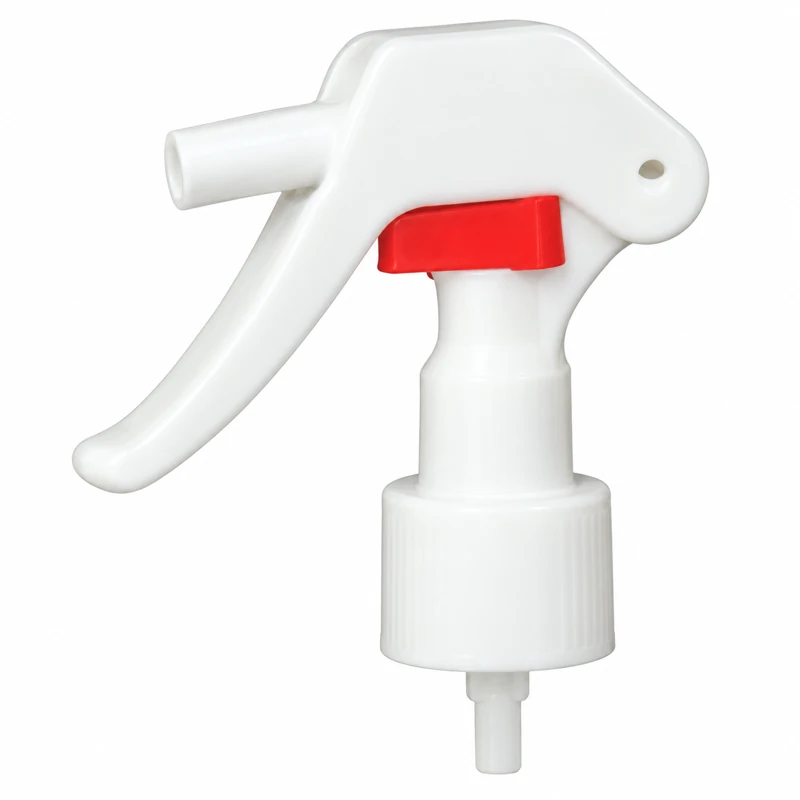
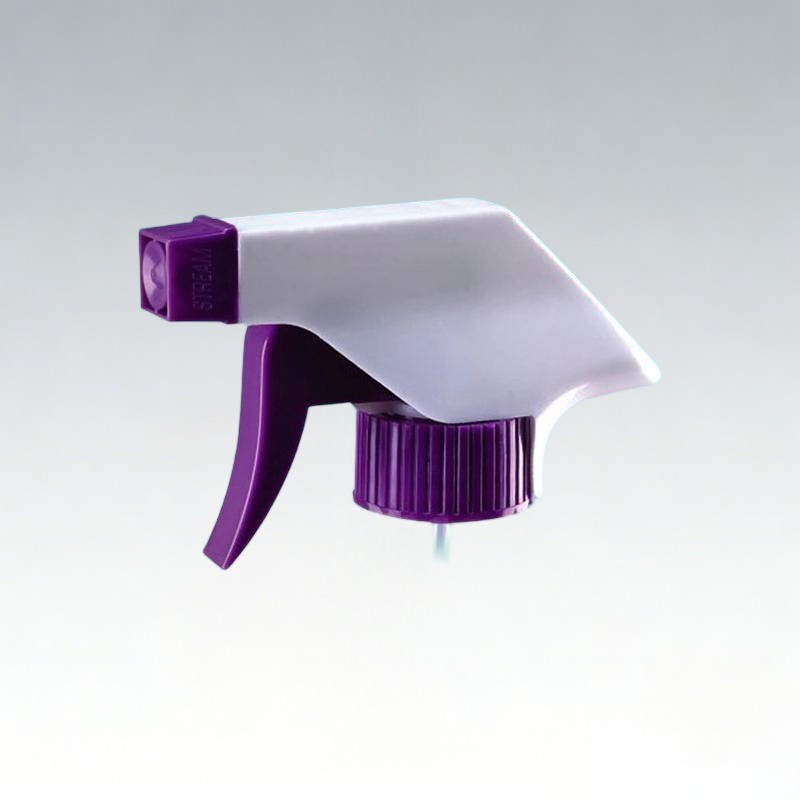
Components to discuss with your supplier.
These references share the component type discussed here. Confirm the selected assembly and application with samples.

Related articles
VIEW THE COMPONENTS