THE DECISION IN BRIEF
Will a twist-off lid fit any jar with the same nominal diameter?
No. Match the complete jar and lid finish specifications, confirm the liner for the product and process, then trial the assembled package.
Nominal size is a starting filter
A diameter label helps narrow a catalogue; it does not describe the entire sealing system. A lug-style twist-off lid engages the corresponding jar features and seals through its compound or liner against the glass finish. A continuous-thread cap is a different closure system. Do not substitute one because the nominal mouth width looks similar. Ask for the complete jar finish identification and the proposed lid drawing.
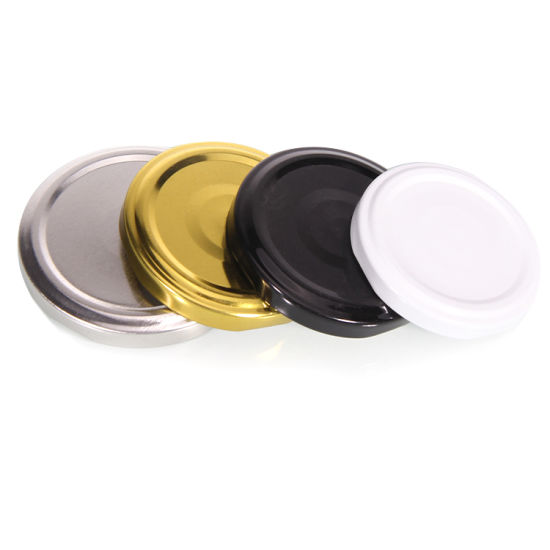
O.Berk’s published 53-2020 metal lug product lists neck diameter, neck finish, and plastisol liner as separate specification fields. That is a useful illustration of the information needed, not a recommendation for that particular cap. STDPAK lists tinplate sizes 30, 38, 43, 48, 53, 58, 63, 70, and 82. Availability within that range does not establish fit to an unidentified jar.
Review the complete application
Send one coordinated specification packet to the jar supplier, closure supplier, and filling partner. Ask them to resolve conflicting assumptions before arranging the production trial.
| Specification | Question to settle | Approval evidence |
|---|---|---|
| Jar finish | Which controlled finish and revision will be supplied? | Drawing and representative jars |
| Lid construction | Does the engagement geometry match the jar? | Identified lid drawing and samples |
| Sealing compound | Is it proposed for this product and process? | Application-specific supplier confirmation |
| Filling and closing | What process conditions and settings apply? | Documented line trial |
| Finished package | Does the pack seal and open acceptably? | Agreed inspection and performance results |
Do not separate the liner from the process
Describe the food or other product, relevant chemistry, filling temperature, and any subsequent thermal process to the closure supplier. A suitable lid for one process is not automatically suitable for another. Do not infer hot-fill, retort, vacuum, or pressure capability from metal construction or a generic catalogue description. Request a specific proposal and involve the processor responsible for the filled product.
Where the pack is intended to develop vacuum, agree how the process and finished seal will be assessed. A visible button condition may be one observation where that feature is present, but it should not be the only acceptance test. Establish appropriate opening, seal-integrity, and process checks with the technical team. Do not invent a universal application torque or closing setting from nominal diameter alone.
Use trials to distinguish engagement from sealing
Before filling, inspect whether sample lids engage consistently on representative jars and sit correctly. Keep jar and lid lot identities. During the line trial, record the actual settings and any interruptions, then evaluate the finished packs after the agreed conditioning. A lid that turns on by hand has not demonstrated that the complete package survives the intended filling and distribution conditions.
If only certain jars fail, compare their finish measurements and condition. If failures increase after a line adjustment, inspect the closing setup and lid handling. If the same assembly works initially but fails after exposure, investigate the compound and process compatibility. Preserve failed packages before dismantling them. Changing the jar, lid, and machine setup together can conceal the cause and create a fragile approval.
Release the jar and lid as a paired specification with controlled samples, approved compound identification, process conditions, and agreed checks. STDPAK’s ordinary MOQ is 30,000 pieces; custom printed tinplate MOQ is 100,000 pieces. Indicative lead time is 35–45 days, subject to quotation. Complete the fit and application review before artwork approval commits the project to a large printed run.
Sources & further reading
Use the references below alongside the selected component drawing and agreed sample plan. Product-specific claims need product-specific evidence.
PRODUCT REFERENCES
Components to discuss with your supplier.
These references share the component type discussed here. Confirm the selected assembly and application with samples.


Related articles
VIEW THE COMPONENTS