THE DECISION IN BRIEF
The stopper fits our bottle. Can we approve it before testing the liquid?
Treat fit as an early gate. Approve the exact stopper only after product-contact trials cover the intended liquid, filling process, storage, and opening pattern.
Define contact before selecting a test
A stopper may encounter more than the liquid resting below it. Splashing during filling, transport orientation, condensation, and repeated pouring can produce different exposures. Describe the actual use sequence to the supplier. Include the product composition information needed for compatibility review, relevant filling conditions, shelf-life objective, and expected storage. Identify whether the closure is intended for a beverage, oil, fragrance, or another formula rather than using a vague liquid category.
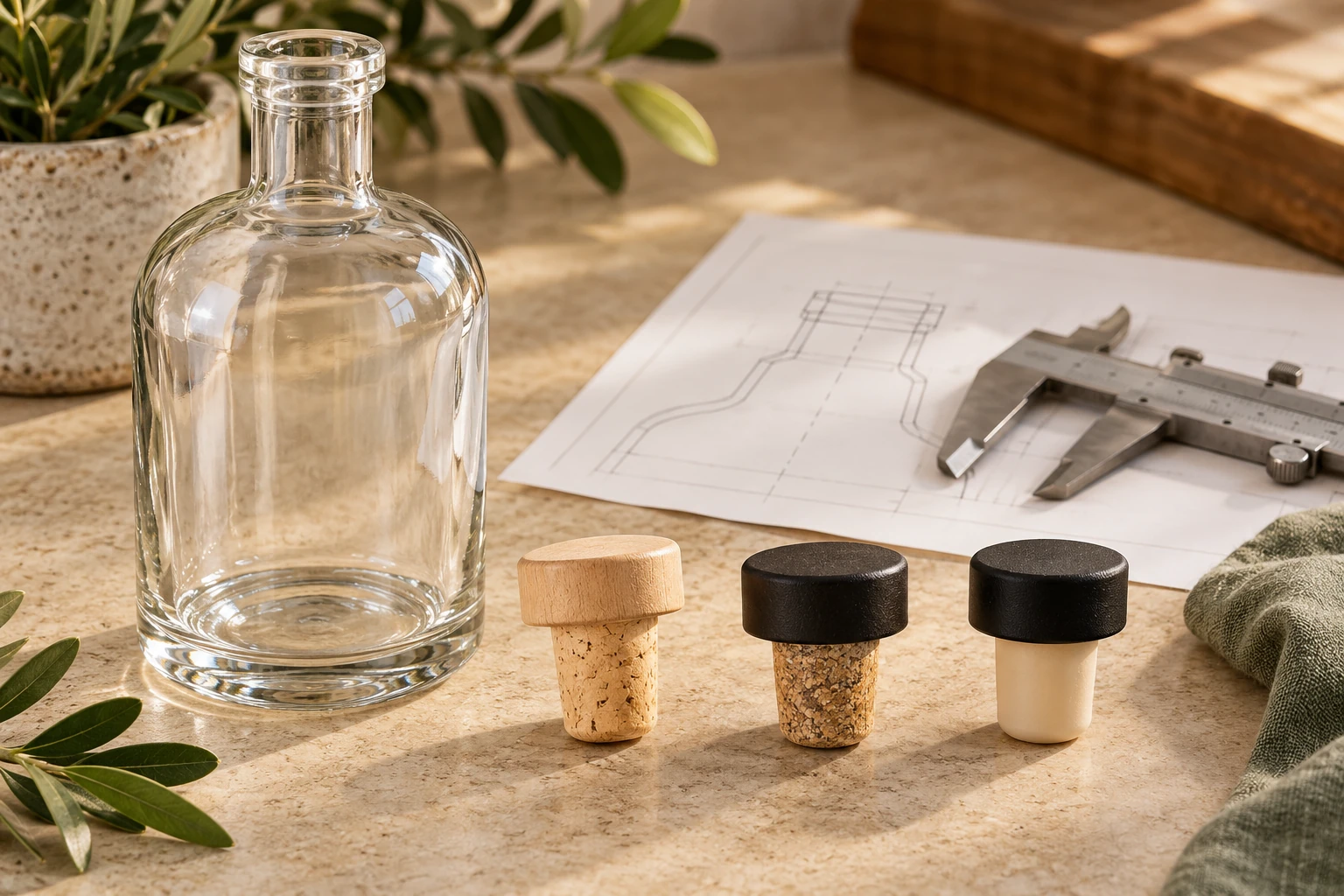
The test article should include the complete stopper construction: stem, treatment, head connection, and any other potentially exposed material. A statement about the base polymer or cork does not automatically cover the assembled article. Ask which components the supporting evidence addresses and whether the proposed color or decoration changes the assessment. If a formulation is confidential, arrange an appropriate technical exchange instead of substituting an unrelated liquid.
Give each failure a separate observation
Agree the assessment method with the people responsible for product quality. Sensory work should follow their controlled process rather than informal tasting of unidentified test samples.
| What to observe | What it may indicate | Useful comparison |
|---|---|---|
| Leakage or stopper movement | A sealing or retention problem | Same bottle and closure before conditioning |
| Swelling, softening, cracking | A material interaction to investigate | Unused stem from the same lot |
| Staining or discoloration | Contact effects or visual transfer | Matched unexposed construction |
| Odor or product change | Possible interaction requiring technical review | Product held in a suitable control pack |
| Loose head connection | Assembly interaction or mechanical damage | Unexposed and repeatedly opened samples |
Design comparisons that can answer a question
Use the intended liquid and representative bottle supply, keeping component identities attached to every test group. Include a control that helps distinguish a product change from a closure-related change. Ask the product technical team which conditions and durations are meaningful. Accelerated exposure can support screening, but a severe condition that changes the product itself may not predict normal storage behavior. Record its purpose and limitations.
Define orientation deliberately. A trial can include relevant transport or handling exposure without implying that every stopper is approved for continuous inverted storage. Amorim’s Top Series instructions specify upright storage and transport for its products, illustrating why supplier instructions matter. Confirm the approved conditions for the exact proposed stopper. Do not transfer another supplier’s application guidance or pressure assumptions to the pack you are purchasing.
Investigate failures without losing the evidence
If leakage appears, check whether it follows bottle batch, closure batch, or orientation. If the liquid changes, compare the control and assess the exposed materials before declaring the stopper responsible. Photograph surfaces and retain unopened reference packs. A failed specimen that has been repeatedly handled or cleaned may no longer help determine the original mechanism. Agree safe handling and disposal with the product team.
Functional compatibility and market documentation are related but separate release gates. FDA’s food-contact guidance ties regulatory status to substances and their authorized uses; a passing practical trial alone does not establish that status. Equally, a document covering a material does not prove acceptable sealing or sensory performance in your product. Request the appropriate evidence for the exact SKU, composition, intended use, and destination market.
Finish with a clearly bounded approval: liquid revision, stopper revision, bottle revision, process, contact conditions, test methods, and outcomes. List changes that reopen the assessment, such as a new fragrance system, alcohol level, stem treatment, or head adhesive. This prevents an approval for one formula being casually reused for a new range with a similar label or bottle shape.
Sources & further reading
Use the references below alongside the selected component drawing and agreed sample plan. Product-specific claims need product-specific evidence.
PRODUCT REFERENCES
Components to discuss with your supplier.
These references share the component type discussed here. Confirm the selected assembly and application with samples.


Related articles
VIEW THE COMPONENTS