
THE DECISION IN BRIEF
Can I choose a bar-top stopper using only the bottle’s neck diameter?
No. Obtain the internal neck profile and representative bottles, then approve the proposed stem through fit, extraction, and liquid-contact trials.
Start with the surface that actually seals
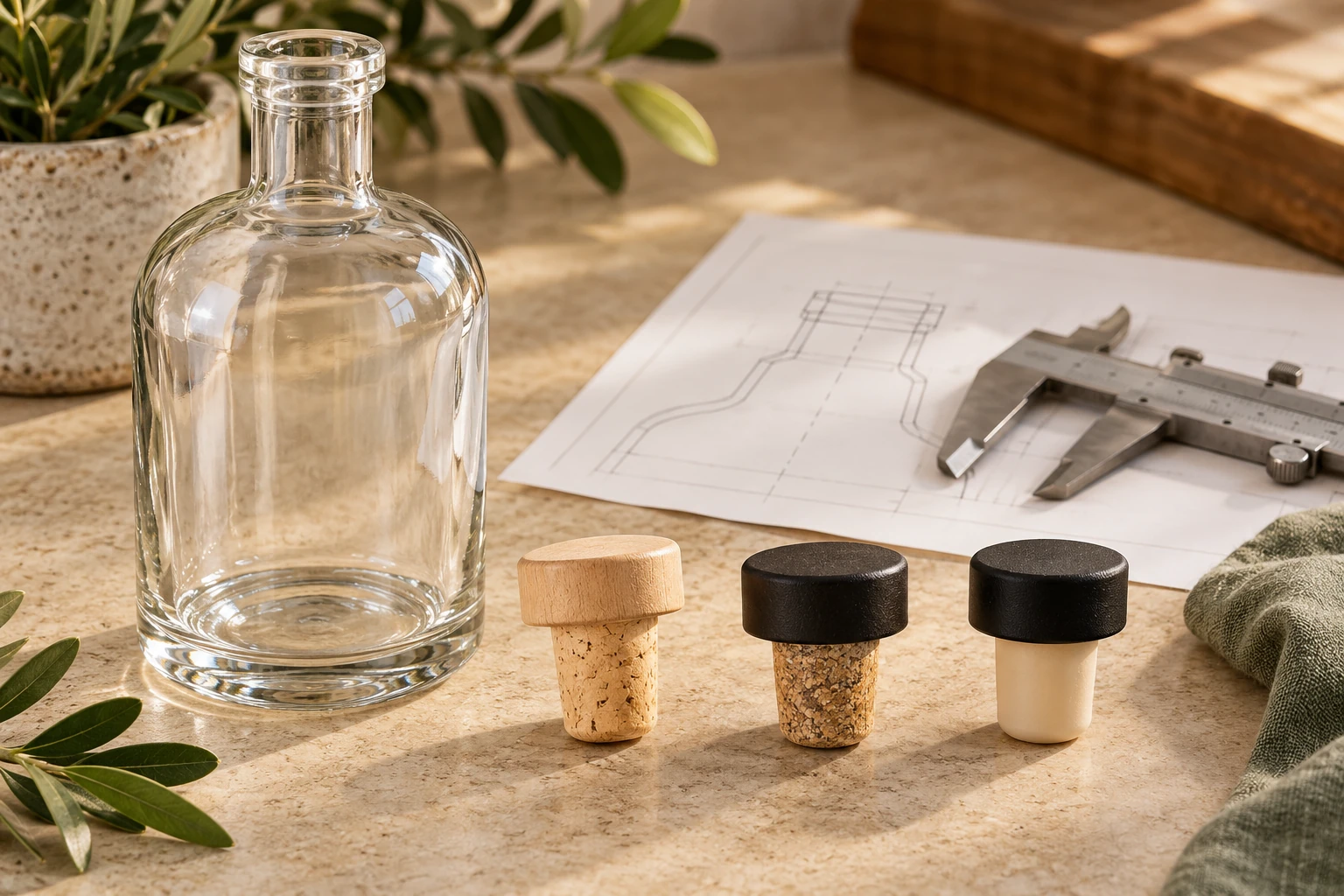
A bar-top stopper seals against the inside of the bottle neck. The decorative head sits above that interface and can make a poor match look convincing. A drawing showing only the outside neck width therefore leaves the most important purchasing question unanswered. Ask the bottle supplier for its controlled internal finish drawing and explain that you are qualifying a friction-fit closure. Do not calculate stem diameter by subtracting an assumed glass wall thickness from an external measurement.
Amorim’s Top Series guidance calls for bottles to be supplied so the stopper can be selected from analysis of the neck configuration. That is a useful purchasing principle, rather than a transferable specification for another supplier’s stopper. Give STDPAK actual bottles alongside available drawings, and identify the beverage, filling process, intended storage position, and opening experience. A new bottle source or finish revision should trigger a fresh fit review.
Build a fit specification
Define the required inputs before discussing a decorative head. Keep drawing revisions on the sample request so that an attractive prototype cannot accidentally become the reference for a different glass finish.
| Input | What to establish | Why it matters |
|---|---|---|
| Internal neck profile | Bore at the relevant depths, taper, and sealing region | A mouth measurement alone misses changes below the opening |
| Stem proposal | Material, diameter, length, and surface treatment | Each influences contact and removal |
| Seating position | Head clearance and insertion depth | Appearance must agree with the sealing design |
| Bottle variation | Representative samples and approved dimensional limits | One favorable bottle cannot establish lot suitability |
Sample across variation, then test the assembled pack
Request samples representing the bottle supply you expect to receive, with bottle batch identities preserved. Measure and record rather than quietly discarding bottles that feel unusual. Assemble proposed stoppers using a repeatable method and compare full seating, visible damage, extraction behavior, and reinsertion. Set acceptance criteria with the closure and bottle suppliers before testing. There is no universal force target that can replace the intended consumer experience and actual materials.
Keep the assembly method consistent while evaluating the stem. If the head is difficult to grip, first distinguish a head-design problem from excessive stem resistance. If one bottle batch is consistently tighter, investigate the glass profile before changing every stopper. Conversely, a good fit in one batch and loose fit in another may reveal that the proposed combination lacks a usable operating window. Averages can hide both failure modes.
Approve the fit together with the use conditions
A dry fit check is an early gate. Follow it with trials using the actual liquid, agreed conditioning, relevant storage orientations, and repeated openings where the product is intended to be reclosed. Record leakage, stopper movement, staining, odor changes, and damage separately. Do not use a successful friction fit as evidence of suitability for carbonation or internal pressure; those applications require a purpose-qualified closure system.
Release an approval packet containing bottle and stopper revisions, retained samples, assembly settings, the agreed inspection method, and test outcomes. State what would require requalification, including a changed stem material, surface treatment, bottle finish, or filling temperature. Confirm that the approved configuration, rather than a visually similar stock item, is the one priced and scheduled.
Sources & further reading
Use the references below alongside the selected component drawing and agreed sample plan. Product-specific claims need product-specific evidence.
PRODUCT REFERENCES
Components to discuss with your supplier.
These references share the component type discussed here. Confirm the selected assembly and application with samples.


Related articles
VIEW THE COMPONENTS