THE DECISION IN BRIEF
Should I switch from cork to a synthetic stopper to reduce complaints?
Identify the complaint mechanism first, then compare exact cork and synthetic constructions in the same bottle and product under an agreed trial.
Turn the complaint into a measurable requirement
A material change can solve one problem while creating another. If consumers report difficult opening, replacing cork without checking the bottle bore or head grip may leave the cause untouched. If the issue is appearance variation, a new visual grade may be more relevant than a new material. Separate leakage, odor, broken stems, staining, and opening effort into distinct complaint categories before asking for quotations.
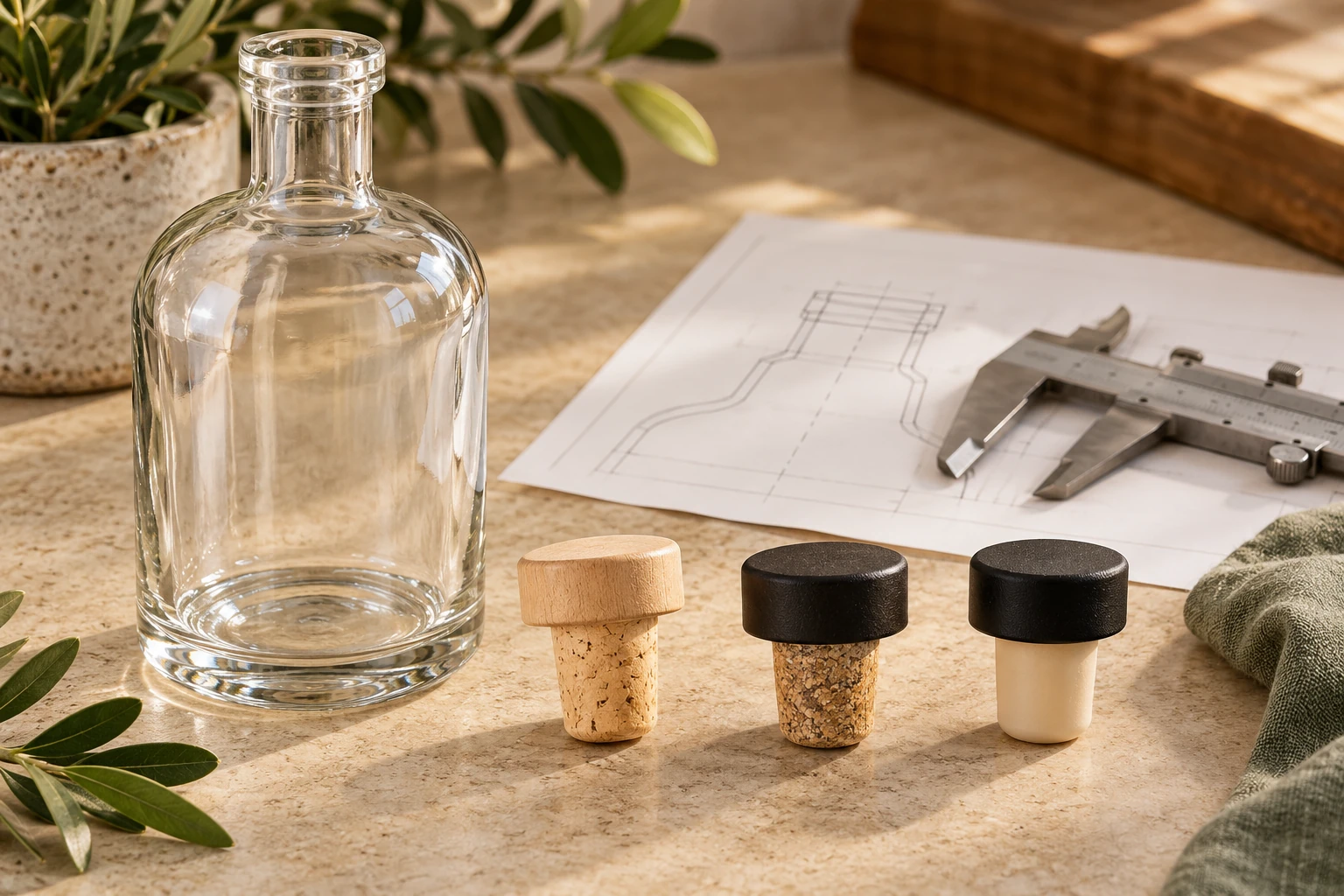
Compare the exact proposed construction, not just the labels cork and synthetic. A cork proposal may involve different cork structures, treatments, and head attachments. A synthetic proposal has a specific formulation, geometry, and surface. Request those details at the level the supplier can disclose, plus controlled product identification. A material family is a shortlist criterion; it is not a final performance specification.
Use the same decision matrix for both candidates
Mark each requirement as essential, preferred, or irrelevant before seeing sample prices. This prevents a strong decorative feature from outweighing a failed functional requirement.
| Decision area | Evidence to request | Purchasing consequence |
|---|---|---|
| Liquid compatibility | Trials with the intended formula and contact conditions | Eliminate unsuitable constructions early |
| Opening and reclosing | Initial and repeated extraction assessment | Choose the intended handling experience |
| Visual consistency | Signed acceptable range or reference samples | Define how variation will be judged |
| Material claims | Construction-specific supporting evidence | Avoid unsupported claims on the finished pack |
| Supply continuity | Approved specification and change notification | Keep later lots comparable |
Avoid borrowing evidence from the wrong closure
Vinventions publishes a construction-specific technical sheet for NOMACORC Classic Green. Amorim separately publishes guidance for capsulated cork stoppers. These sources illustrate why evidence belongs to a named product and application. Results for a straight wine closure cannot establish the behavior of a decorative bar-top stopper, even when both are described as synthetic or cork. Ask what the proposed supplier’s evidence actually covers.
Where oxygen exposure matters to the product, involve the product technical team and request application-relevant evidence. Do not rank all synthetic stoppers or all corks by a single oxygen-performance assumption. Likewise, a visual statement such as natural appearance does not prove sensory neutrality, and an environmental claim needs its own scope and substantiation. Decide what matters for this launch before paying for attributes that the product does not need.
Run a controlled comparison and make the commercial choice
Use the same bottle supply and liquid batch for both candidates, with separately identified controls. Keep filling, insertion, conditioning, and inspection methods consistent. Include unopened packs and consumer-style reclosing where appropriate. Inspect the stem and head connection after use rather than evaluating the head alone. A stopper that looks excellent before filling may behave differently after contact or repeated removal.
If one candidate fails, investigate whether the failure follows material, geometry, bottle variation, or application method. Do not adjust several variables at once and then credit the material change. Preserve the failed assemblies and record their identities. Ask the supplier to explain the proposed corrective change and test it against the original acceptance criteria, with the successful candidate retained as a comparison.
Only compare total commercial value after essential performance gates pass. Include decoration, packing, scrap exposure, inspection effort, and stock commitments as well as piece price. Agree whether a future material or treatment change requires notification and renewed approval. This protects the purchasing decision after the initial sample set has been accepted.
Sources & further reading
Use the references below alongside the selected component drawing and agreed sample plan. Product-specific claims need product-specific evidence.
PRODUCT REFERENCES
Components to discuss with your supplier.
These references share the component type discussed here. Confirm the selected assembly and application with samples.


Related articles
VIEW THE COMPONENTS