THE DECISION IN BRIEF
Two hair mist formula variants spray differently and leave different residue. How should we choose the formula–sprayer pairing?
Compare identified formula variants on one controlled sprayer, then compare suitable nozzle candidates with the selected bulk. Track filaments, deposits, spray quality and component condition separately instead of treating every residue problem as pump damage.
Describe what leaves the outlet
A hair mist development brief may include several styling or film-forming variants. Ask the formulator to identify which differences matter to the packaging review, and supply finished samples with separate references. Do not label every bottle simply “hair mist” or substitute a diluted base for the proposed saleable product.
During dispensing, distinguish a visible strand stretching from the outlet, liquid accumulating around it and material remaining after the portion has dried. Record whether the spray changes before or after the residue appears. These are observations for the teams to investigate, not proof of a particular ingredient mechanism.
Separate formula screening from nozzle selection
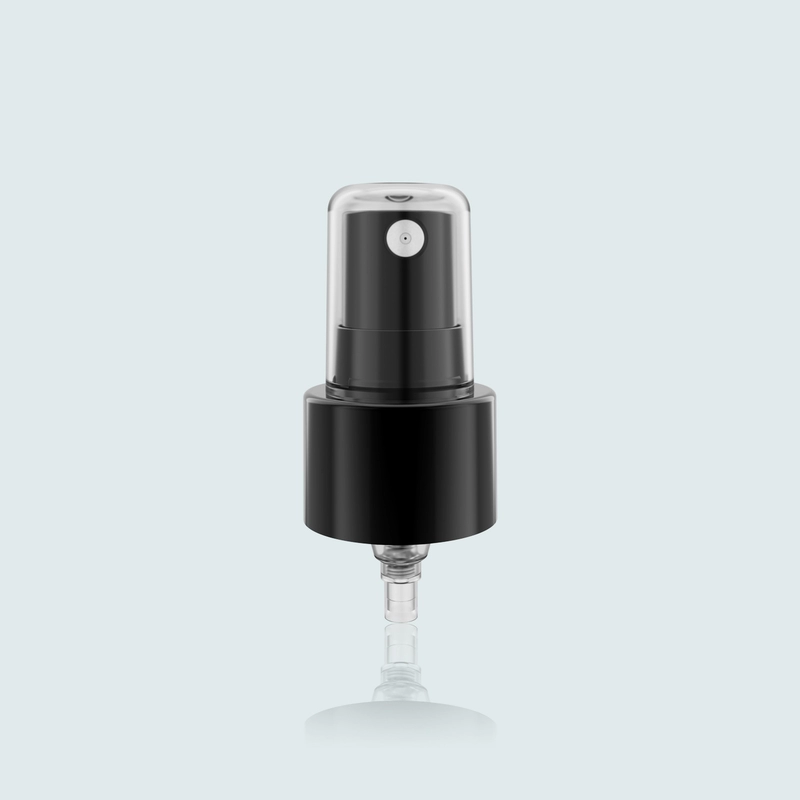
Aptar's PZ1 resource offers insert selection according to formula type. Use that distinction to plan two comparisons rather than swapping bulk and head together.
| Comparison | Keep controlled | Question |
|---|---|---|
| Formula variants | One identified engine, insert and actuator | Which bulk changes the observed delivery or residue? |
| Nozzle candidates | One representative selected formula | Which proposed configuration meets the application brief? |
| Component condition | Matched exposed and reference parts | Is residue accompanied by a physical or functional change? |
Distinguish deposits from component deterioration
Photograph the outlet and surrounding surfaces at defined points in the same application sequence. Preserve representative deposits and failed assemblies for the supplier. If residue appears but actuator travel and return remain consistent, record those functions as unchanged rather than calling the whole pump degraded.
If movement, sealing or surface condition also changes, retain that evidence separately. A visible deposit does not establish material damage, while an apparently clean outlet does not rule it out. Ask the supplier and formulator to assess the observed pattern without assigning chemical causation from photographs alone.
Choose a pairing the product can maintain
Compare spray distribution, usable portion, filament behaviour and exterior cleanliness together. A nozzle that conceals residue but gives an unsuitable application is not a complete improvement. Have the product team decide which differences are acceptable for the intended styling task.
Record the winning formula and exact nozzle configuration, including variants rejected and why. If a later formula adds or changes its film-forming system, review the affected screening evidence. This preserves the decision that made the hair product viable rather than allowing every later formulation to inherit approval from the same-looking package.
Sources & further reading
Use the references below alongside the selected component drawing and agreed sample plan. Product-specific claims need product-specific evidence.
PRODUCT REFERENCES
Components to discuss with your supplier.
These references share the component type discussed here. Confirm the selected assembly and application with samples.

Related articles
VIEW THE COMPONENTS