THE DECISION IN BRIEF
Our bottle and pump both say 24/410. Can we approve the order from those markings?
Use the matching marking as a screening step. Approve only after drawing review and filled-bottle trials confirm housing clearance, thread engagement, sealing and operation.
Start with the complete finish designation
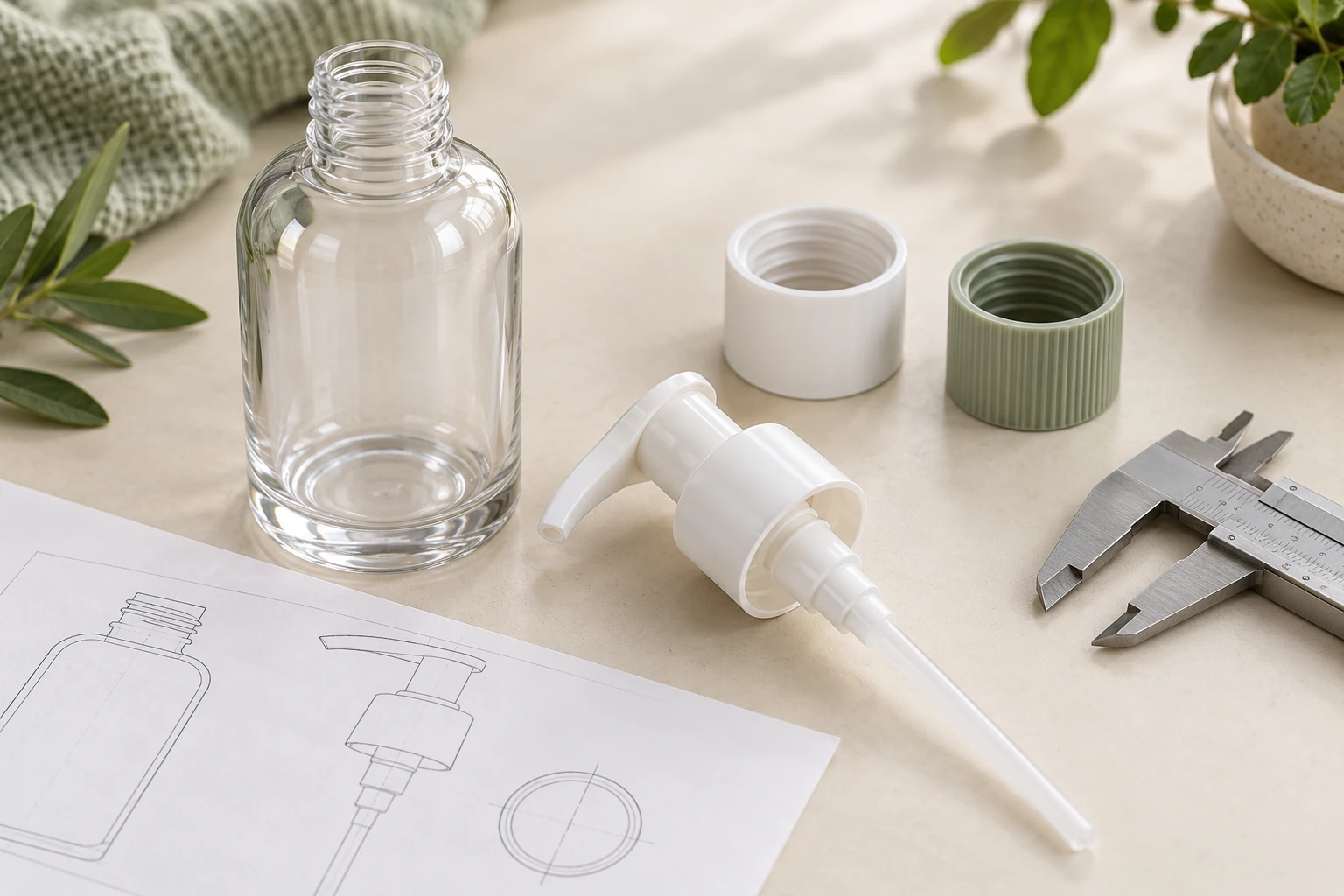
A purchasing request that says only “24 mm lotion pump” leaves too much open. The diameter and finish designation belong together. Record 24/410, 24/415 or the actual designation supplied on the bottle drawing, rather than treating every nominally similar neck as interchangeable. A photograph of a ruler across the opening is useful context but cannot replace the drawing.
O.Berk distinguishes the closure, gasket and pump housing as separate components. Its lotion-pump explanation specifically warns that a glass bottle opening may be too narrow for the housing even when the closure appears suitable. This is a practical reason to send an actual bottle to the pump supplier, especially when replacing a plastic container with glass.
Check three interfaces instead of one
The thread retains the assembly. The sealing interface controls the contact between the pump gasket and bottle land. The housing must pass into the opening without interference. Ask the bottle and pump suppliers to review all three against their respective drawings. Nominal finish agreement does not establish the gasket material, assembly torque or internal clearance.
Do not solve a difficult assembly by simply tightening harder. A collar that stops above its intended position may be meeting a shoulder, an unsuitable finish or an obstructed housing. Excess force can hide the symptom during a hand trial and create a problem on the filling line. Quarantine the mismatch and identify the contacting surfaces.
| What the buyer has | What it establishes | What remains to confirm |
|---|---|---|
| 24/410 on both quotations | A nominal matching finish | Drawing dimensions and assembled fit |
| Pump screws onto an empty bottle | Some thread engagement | Seal, housing clearance and filled performance |
| One leak-free hand sample | A promising combination | Repeatability across representative samples |
| Approved decorated bottle | The intended exterior | Unchanged neck and sealing surfaces |
A practical sample sequence
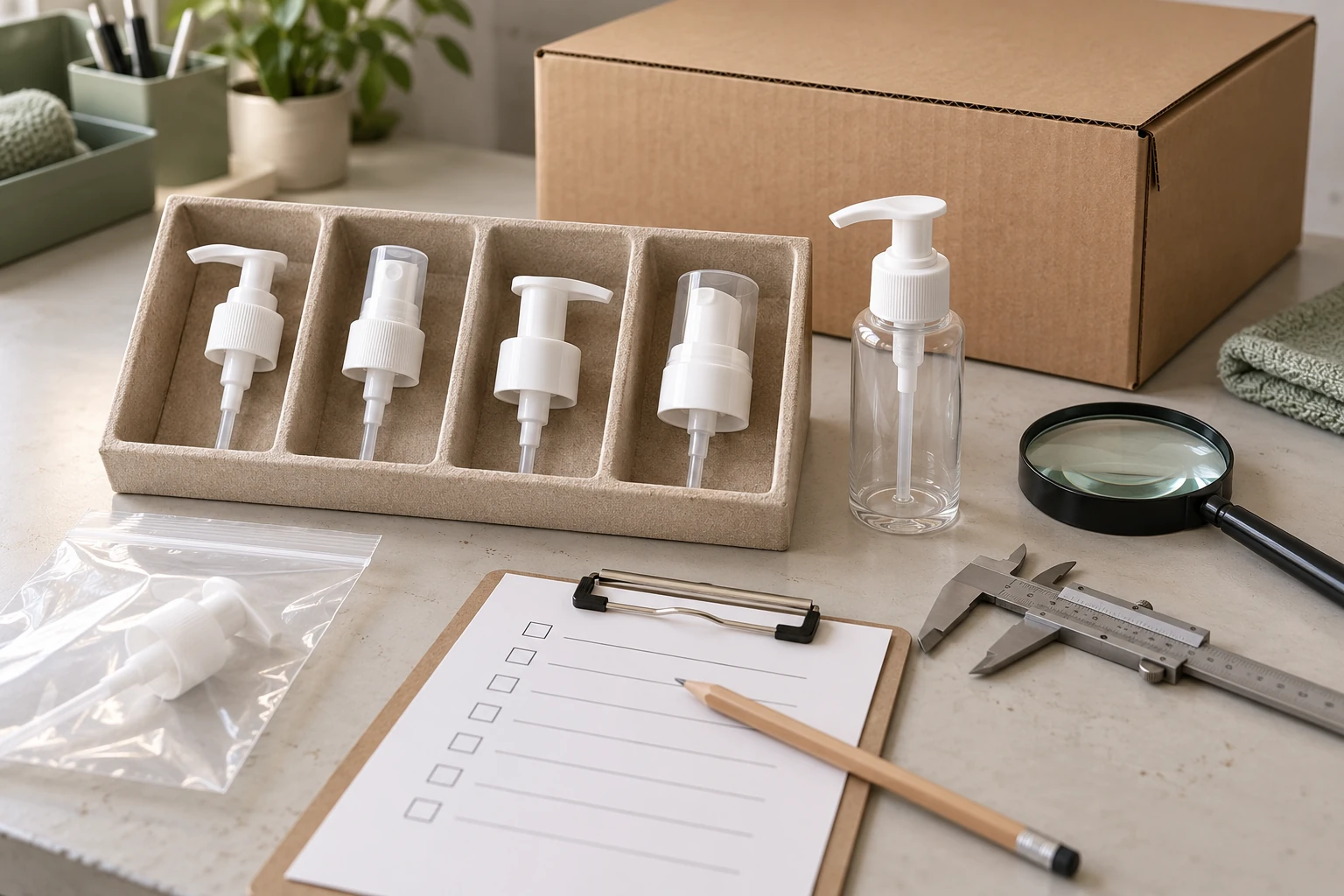
Begin with undecorated bottles from the intended bottle source and the exact proposed pump configuration. Record whether the collar seats evenly, whether the actuator can unlock without loosening the closure, and whether the pump body catches during insertion. Then fill with the intended formula and use the proposed assembly method.
Evaluate more than a display sample. Include representative bottle and pump samples, agree the quantity with quality teams, and retain identification for both component lots. Assess leakage in the relevant orientations and handling conditions, along with dispensing after storage. Define acceptance criteria before reviewing results so that a visually attractive sample does not become the standard by default.
If the bottle supplier changes its mould, resin, glass design or neck drawing, reopen the fit review. The same applies to changes in the pump gasket or housing. A product name carried forward on a purchase order is not evidence that every interface stayed the same.
Put the approved combination on the order
Specify the bottle drawing revision, pump reference, nominal finish, gasket selection and approved assembly instructions together. Attach the signed sample record and identify any unresolved condition. Avoid wording such as “fits all standard bottles” because it gives receiving teams no usable inspection target.
For an STDPAK enquiry, start with the lotion-pump category and supply the bottle drawing plus physical samples. Standard MOQ is 30,000 pieces and typical lead time is 35–45 days, subject to quotation; allow separate time for compatibility work before releasing production. A cheaper pump becomes a useful saving only after it fits the package you actually intend to sell.
Sources & further reading
Use the references below alongside the selected component drawing and agreed sample plan. Product-specific claims need product-specific evidence.
PRODUCT REFERENCES
Components to discuss with your supplier.
These references share the component type discussed here. Confirm the selected assembly and application with samples.
Related articles
VIEW THE COMPONENTS