THE DECISION IN BRIEF
Will a twist-lock lotion pump prevent leaks during parcel delivery?
A lock can reduce accidental actuation, but approve transport performance on the complete filled pack. Confirm the exact locking action, seal and protective packaging instead of relying on the label “twist lock.”
Ask for a demonstration, not a lock name
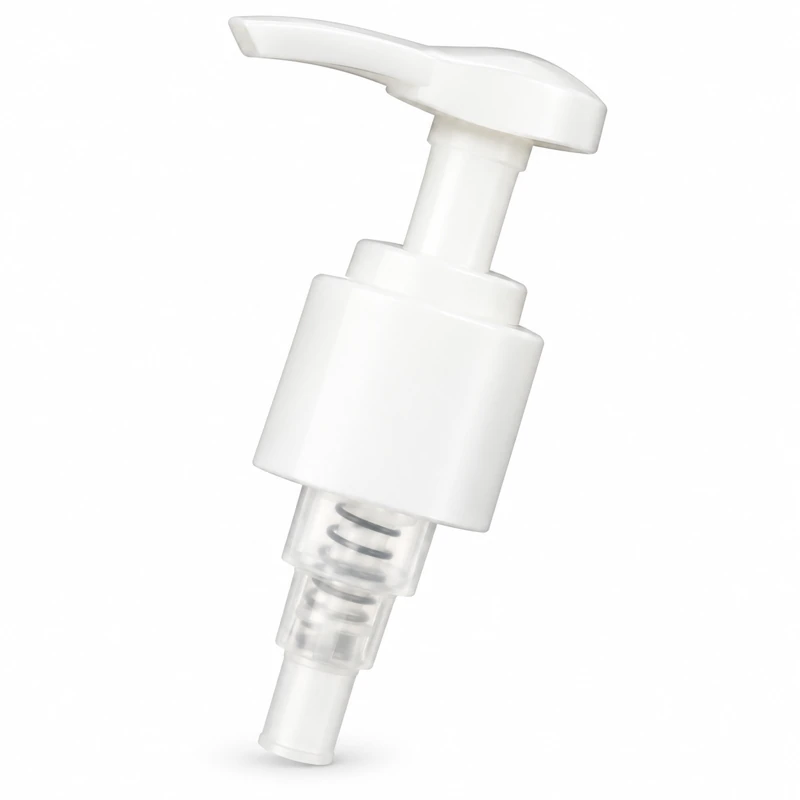
Up-lock, down-lock and twist-lock descriptions are not sufficient operating instructions. Ask the supplier to show the supplied state, opening action, dispensing state and relocking action on the proposed reference. A twist action may describe how an actuator changes state without telling you whether it parks raised or depressed.
O.Berk identifies up-lock and down-lock actuator features as ways to prevent accidental output. Aptar's Hi Flow description pairs a down-locking design with other transport-oriented features. The purchasing lesson is to review the whole configuration: a locking mechanism is one part of transport performance, alongside the closure seal, actuator protection and outer pack.
Follow the customer's hands
Have reviewers open a filled sample without coaching. Observe whether they grip the collar or actuator, turn in the expected direction and accidentally unscrew the bottle closure. If unlocking consistently disturbs the closure, clarify assembly instructions and usability before assuming the end customer will understand the mechanism.
For a pump that must be pressed down while relocking, inspect what happens to product during that movement. Depending on the design and its operating sequence, relocking may involve dispensing. Demonstrate this with the intended formula rather than claiming that every down-locking pump behaves identically. Decide whether the resulting user experience suits a travel bottle or a permanent bathroom pack.
Raised operating height, spout direction and carton clearance also matter. A compact shipping silhouette may suit one carton layout, while an exposed raised actuator may need a protective feature or different headspace. Compare the filled package in its actual retail carton and shipping arrangement.
| Decision point | Buyer check | Reason to reject or revise |
|---|---|---|
| Opening action | Open without loosening the closure | Unlocking compromises the assembled seal |
| Relocking | Follow the intended sequence with formula | Unacceptable product release or confusing action |
| Transport state | Confirm every unit reaches the same lock state | Mixed states entering the packing line |
| Head protection | Check cap, clip or carton clearance if specified | Packaging can press or damage the actuator |
| After handling | Unlock and dispense again | Lock damage or poor first-use function |
Separate leakage from accidental pumping
A wet shipping carton does not identify the escape path. Product may have left the nozzle after accidental actuation or escaped around the neck seal. Inspect the filled samples and record where wetting begins. Changing the lock will not necessarily resolve an unsuitable bottle land or closure assembly.
Agree a transport evaluation relevant to the route, fill and packaging. Include the intended lock state and secondary packaging, then inspect both leakage and operation afterwards. Any manufacturer claim about an e-commerce-capable product applies to the stated configuration and conditions; it cannot be transferred to an unrelated pump simply because the lock looks similar.
Where a clip or overcap is proposed, cost it as an assembled system. Include insertion labour, line handling, carton dimensions and the likelihood of consumers losing a removable piece. A slightly more expensive integrated mechanism may simplify operations, but that benefit needs confirmation on the filling line.
Make the locked state inspectable
Use labelled photographs or a short approved operating instruction to show the production packing state. Define who confirms it at the pump supplier and who checks it after bottle filling. Add the pump reference, lock direction and any required cap or clip to the purchase specification.
Request an STDPAK sample in the intended transport configuration and compare it with your current pack using the same formula and handling plan. Release only the demonstrated combination. This creates a clearer purchasing decision than asking for a generic “leakproof locking pump,” a phrase that gives neither party an observable assembly requirement.
Sources & further reading
Use the references below alongside the selected component drawing and agreed sample plan. Product-specific claims need product-specific evidence.
PRODUCT REFERENCES
Components to discuss with your supplier.
These references share the component type discussed here. Confirm the selected assembly and application with samples.

Related articles
VIEW THE COMPONENTS