THE DECISION IN BRIEF
We approved the bottle and sprayer separately. Why does the filled pack still need a combined trial?
Separate approvals do not establish interface performance. Evaluate the exact bottle, pump, formula, tube, cap and assembly method together, then release that documented combination.
The interface is where separate choices meet
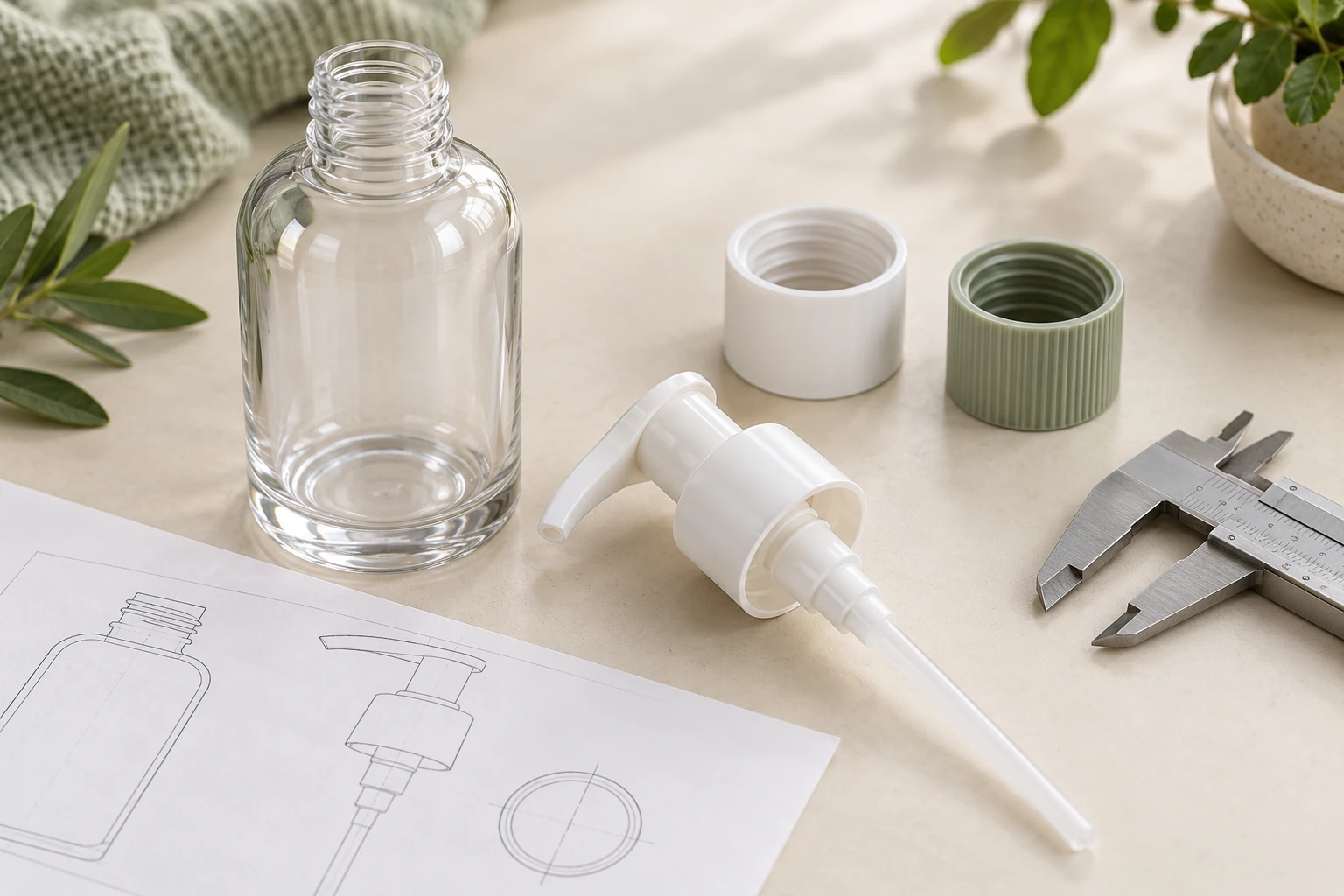
A bottle can meet its own drawing and a pump can dispense successfully in a supplier demonstration, yet the proposed combination may still need adjustment. The bottle opening, sealing land, attachment, tube reach and protective parts all become relevant when the assembly is filled and handled.
Aptar's PZ1 page offers multiple actuators, caps and formula-related insert choices. O.Berk's lotion-pump component explanation, useful for understanding pump interfaces more broadly, separately identifies housing, gasket and tube. These resources support a system-level review; they do not establish compatibility between an arbitrary bottle and a particular STDPAK mist pump.
Build samples that represent the intended saleable pack
Use the intended bottle source, chosen pump configuration and final formula. Identify tube length and cut, cap and collar references, decoration process and assembly method. If a development sample substitutes any of these, label the substitution and the question it can answer. A substitute bottle might show colour balance but cannot approve the intended neck interface.
Include the actual filling team early. Ask how the line holds the bottle, inserts the tube, applies the attachment and handles the cap. For screw assemblies, agree closure application instructions. For crimp assemblies, confirm the matched tooling and inspection plan. A hand-built sample alone cannot answer every manufacturing question.
Make the initial trial observable. Keep records of rejected units and stop to inspect recurring insertion or seating problems. Adjusting equipment without preserving the evidence can hide a component mismatch that returns during the larger run.
Use a connected approval checklist
The proposed checkpoints below connect functions that are often reviewed by separate departments. Agree the relevant conditions and criteria with your suppliers and quality team; the checklist does not prescribe universal tolerances or claim that testing has already been completed.
- 1. Component identity: confirm the bottle drawing revision, pump reference, insert, actuator, cap, collar and tube specification.
- 2. Assembly: verify insertion, attachment, sealing contact, intended collar position and unobstructed actuator travel.
- 3. First use: record cap removal, priming, initial stable spray and any user instructions needed.
- 4. Repeated use: assess measured output, target distribution, recovery and restart after relevant standing periods.
- 5. End of use: review pickup at low fill and remaining product under the intended use instructions.
- 6. Handling: evaluate the filled, capped and packed configuration under the agreed storage and distribution plan.
- 7. Production release: retain identified samples and record accepted settings, results, exceptions and change-approval responsibilities.
Resolve failures at their actual interface
If liquid appears near the neck, inspect the sealing and attachment before changing the spray insert. If the pattern is poor while the closure remains dry, investigate formula and dispensing configuration. If performance declines at low fill, review pickup and tube position. Symptom-based investigation is faster than replacing all parts simultaneously.
Review appearance after functional use as well as before it. Formula contact, cap replacement and ordinary handling may reveal rubbing or wetting that a dry decorated sample never showed. Keep aesthetic approval and functional observations in the same record so a cosmetic revision cannot accidentally bypass the required repeat checks.
An alternate bottle, cap coating or pump engine should trigger a documented assessment of what needs reevaluation. It does not always require restarting every activity, but the decision should be explicit and based on the interfaces changed.
Keep component development, sample approval and production scheduling distinct. The commercial order becomes clearer when every party can point to the same complete reference pack.
Sources & further reading
Use the references below alongside the selected component drawing and agreed sample plan. Product-specific claims need product-specific evidence.
PRODUCT REFERENCES
Components to discuss with your supplier.
These references share the component type discussed here. Confirm the selected assembly and application with samples.
Related articles
VIEW THE COMPONENTS