THE DECISION IN BRIEF
Our packaging samples passed. What must be settled before the first production order?
Confirm what the samples represent, run the agreed production-relevant trial, close deviations, and release one controlled specification with retained references and change rules.
Ask what the approved sample actually represents
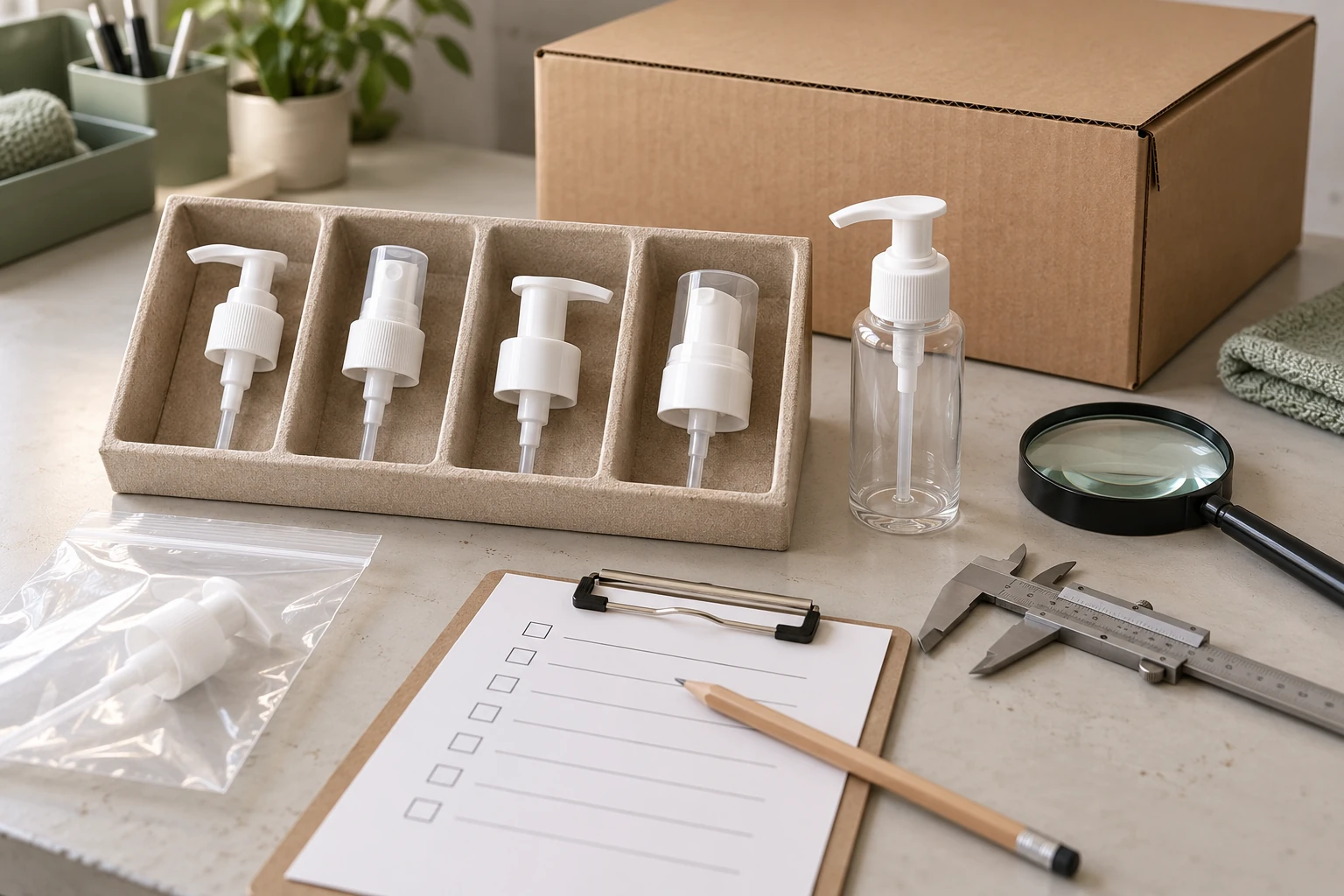
A sample can be useful without being production representative. It may have a hand-cut tube, a stock color, a different resin, or manually applied decoration. List those differences before planning a pilot. Ask which materials, tooling, assembly route, and packing will be used for the order. If the sample was prepared differently, determine which claims it can support and which questions remain open.
Define the pilot’s decisions in advance. Common questions include whether the component feeds correctly, assembles consistently, dispenses the formula, survives handling, and meets appearance expectations. Agree who records each outcome and who can release the order. A large number of pilot units does not make the trial informative if no one has defined failure or preserved the actual line conditions.
Release through explicit gates
The following is a purchasing control framework, not a fixed sampling standard. Choose sample quantities and methods with the supplier and the team responsible for your product risks.
| Gate | Evidence required | Hold point |
|---|---|---|
| Design freeze | Identified component and bottle revisions | Unresolved functional dimensions |
| Trial readiness | Representative materials and agreed protocol | Unknown differences from production |
| Line pilot | Settings, observations, failures, and retained samples | Unexplained handling or assembly faults |
| Pack validation | Relevant product and distribution results | Unclosed compatibility or transport failure |
| Order release | Signed specification and closed deviations | Conflicting artwork or component files |
| First receipt | Lot identity and agreed incoming checks | Unapproved substitution or missing traceability |
Make the line trial diagnostically useful
Record the actual bottle and component lots, formula revision, operating conditions, equipment settings, and interruptions. Distinguish component defects from feeding, application, and adjustment issues. If the line requires a change, preserve the before-and-after samples and note the reason. A pilot that passes only after undocumented operator workarounds has not yet established a stable production instruction.
Retain both acceptable and failed examples with their identities intact. Ask whether a failure follows one carton, one cavity where identifiable, one shift, or one equipment setting. Do not average intermittent failures away. Agree the corrective action and the specific evidence needed to close it. If a construction change is introduced, assess whether earlier compatibility or distribution results still cover the final pack.
Test the package that will actually travel
Transport qualification should use the intended assembled product and packing configuration, with an appropriate test objective and distribution scenario. ISTA’s guidance emphasizes knowing how a package is handled and stored and notes that testing may occur early and again with production products. A developmental substitute should therefore be identified as such. Do not transfer a successful test from an unrelated bottle or carton without technical justification.
Freeze the carton count, orientation, dividers, protective clips, and pallet arrangement alongside the component. A later effort to improve container utilization can change the protection approved during the pilot. Review changes through the same responsible team rather than treating outer packing as an informal warehouse choice. Keep relevant test reports linked to the configuration they evaluated.
The production release packet should include final drawings, approved samples, artwork, materials, line instructions, packing, inspection criteria, and documented exceptions. Identify the supplier contact for proposed changes and the buyer’s approval authority. Reserve time for unresolved qualification work instead of hiding it inside the manufacturing estimate.
Sources & further reading
Use the references below alongside the selected component drawing and agreed sample plan. Product-specific claims need product-specific evidence.
VIEW THE COMPONENTS